
Is the world heading toward multiple digital money systems rather than one – and does it matter?
Paul Golden explores whether the future may not be about choosing one form of digital money over another but rather building the infrastructure that allows many forms of digital money to coexist and interact seamlessly.
The major shift in the digital money debate of late has been a move away from asking whether digital currencies work to exploring which form of digital money will become part of mainstream financial infrastructure.
A number of developments are behind this shift, perhaps the most important of which is that stablecoins have gone from being primarily crypto market infrastructure towards being considered a genuine payments and settlement technology.
This has been driven by regulation as well as technology. In the US, Congress has been moving towards a much clearer regulatory framework, including the stablecoin legislation already enacted and the broader CLARITY Act now advancing through the Senate.
There is also increasing evidence of banks and financial institutions deploying stablecoins for real-world payment and settlement applications. In August, for example, the Standard Chartered-backed Anchorpoint joint venture began rolling out a Hong Kong dollar stablecoin aimed initially at institutional users and applications such as payments and settlement. Banking on tokenised deposits
Perhaps the most important development for corporate treasury is the rise of tokenised deposits.
Instead of creating a new private digital currency, banks can put conventional commercial bank money onto programmable/blockchain infrastructure. The result is potentially 24/7, programmable bank money that remains a claim on a regulated bank. Bank of England Monetary Policy Committee member, Megan Greene, recently predicted that tokenised deposits could eventually overtake stablecoins, precisely because they retain the banking relationship and integrate more naturally with the existing financial system.
Rather than simply asking whether consumers should have a digital version of cash, central banks are increasingly exploring wholesale digital money and tokenised settlement.
The BIS’s Project Agorá, involving central banks and major financial institutions, is testing tokenised commercial bank deposits alongside tokenised central bank money for cross-border transactions. Recent testing demonstrated the possibility of atomic, multi-currency settlement, potentially operating around the clock.
The BIS believes the future monetary system could consist of tokenised central bank reserves plus tokenised commercial bank money plus tokenised government securities, operating on interoperable platforms.
The eurozone is probably the clearest example of a CBDC moving from conceptual discussion towards advanced technical preparation. The ECB has moved beyond its initial preparation phase and is now working towards a potential 2027 pilot and 2029 first issuance, assuming EU legislation is adopted this year.
Importantly, the ECB is simultaneously developing infrastructure for DLT-based financial markets. Its planned Pontes system is intended to allow DLT transactions to settle in central bank money.
The strongest economic case for digital money increasingly looks like crossborder movement of money, rather than replacing domestic cash.
Tokenisation potentially allows 24/7 settlement, atomic delivery-versuspayment, fewer intermediaries, programmable payments, substantially faster FX settlement, more efficient liquidity management and settlement across different jurisdictions and currencies.
Project Agorá is particularly important here because it is trying to combine tokenised deposits and central bank money rather than simply replacing the banking system with crypto.

The question is no longer simply whether blockchain can make payments faster
BLOCKCHAIN DEBATE MOVES ON
The question is no longer simply whether blockchain can make payments faster – policymakers are now asking what kind of money should exist on tokenised networks.
The BIS has become particularly explicit about this. Its June 2026 assessment argues that stablecoins demonstrate the potential of tokenisation but have shortcomings as a foundation for the monetary system, particularly around the traditional properties of money and financial integrity.

“A faster payment system is a single trick pony whereas a blockchain can represent any given digital asset.”
Tony McLaughlin
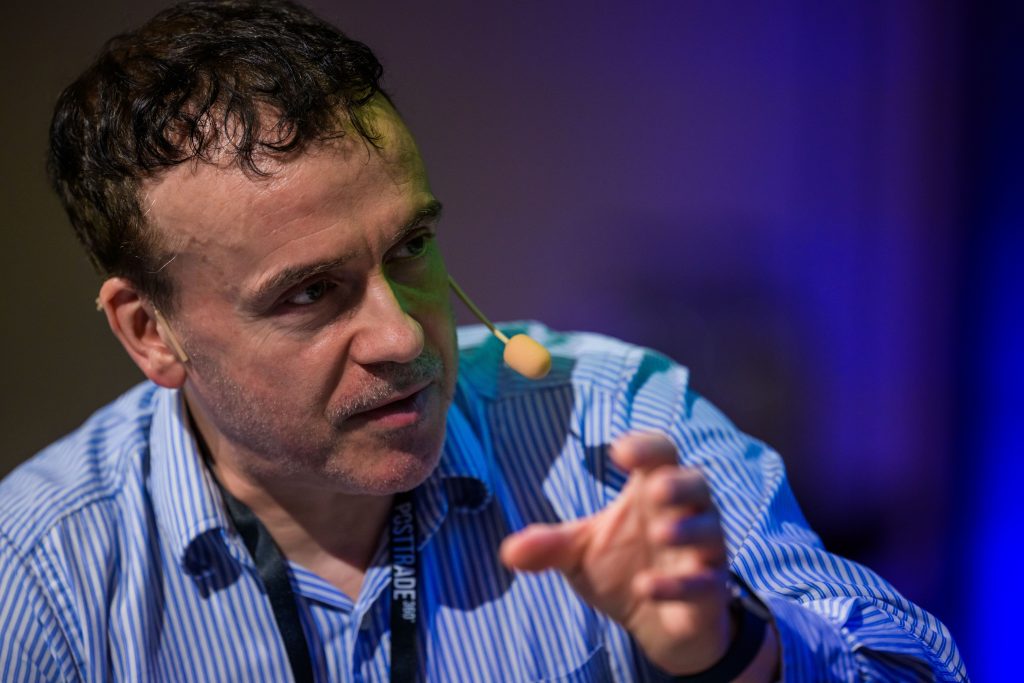
The direction of travel is towards a single digital money system inasmuch as the focus is squarely on upgrading sovereign currencies. Alternatives to sovereign currencies – such as Bitcoin have not taken off as methods of payment and the dominant stablecoins, tokenised deposits and CBDCs are denominated in fiat currencies and seek singleness of money, so in that sense it is business as usual. That is the view of Tony McLaughlin, CEO of Ubyx, who adds that history suggests that there will be a mixture of common standards and bridges between islands.
“Everyone on the same system isn’t the direction of travel; the convergence will be to more general purpose value transfer rails,” he says. “A faster payment system is a single trick pony whereas a blockchain can represent any given digital asset. Just as the iPhone replaced many devices, so blockchains replace many single function value transfer rails.”
According to McLaughlin, the core blockchain innovation is general purpose representation of any arbitrary digital asset on a common programmable infrastructure.
“That is the paradigm shift away from the world of silos that we live in today,” he says, while acknowledging that capitalism is creative destruction and there will be many failures on the road to building a better financial system and suggesting that there will be a synthesis between Web3 and TradFi that will leave neither unchanged.
On the question of connectivity, Phoebe Zhou, head of client solutions, Global Payment Solutions HSBC believes the more practical approach is to enable different forms of digital money to interoperate securely across existing financial infrastructure. “Rather than asking the industry to choose one winner, it should focus on creating trusted connectivity between multiple networks,” she says. “Clients often care less about the underlying technology than whether money moves securely, efficiently and with certainty.”

“We expect multiple forms of digital money to coexist, because each addresses different needs for different use cases.”
Phoebe Zhou
INTER-BANK INTEROPERABILITY INITIATIVES
HSBC is participating in a number of industry initiatives focused on future inter-bank interoperability – including tokenised deposit market infrastructure development and broader cross-border industry projects such as UK Finance’s Great British Tokenised Deposit (GBTD) live pilot; The Clearing House’s bank-led on-chain money initiative; and Swift’s blockchain ledger capability.
As for which technologies will have the biggest role to play in connecting digital money ecosystems, Zhou reckons technology alone will not solve fragmentation and that the real value comes from combining trusted infrastructure with open connectivity. “APIs can allow banks, fintechs and market infrastructures to integrate without necessarily having to replace existing systems,” she says
“Standardised messaging – particularly ISO 20022 – provides a common business language across payment rails. Shared ledger technologies and tokenisation platforms can enable new settlement models but the interoperability layer will be equally important.”

This is where initiatives such as SWIFT’s work on blockchain interoperability demonstrate value. Zhou adds that the future is therefore unlikely to be built around one technology but will rather be an ecosystem where APIs, messaging standards, tokenisation platforms and trusted connectivity all work together.
“We expect multiple forms of digital money to coexist, because each addresses different needs for different use cases,” she says. “Rather than one replacing another, the industry is moving towards a multi-asset ecosystem where each form of digital money has a distinct role.”
The challenge is not deciding which model will dominate but ensuring they can interoperate seamlessly so that clients experience a unified financial system rather than fragmented networks, suggests Zhou. “For banks, success will increasingly depend on acting as trusted connectors between these different forms of value, allowing clients to access new capabilities without introducing unnecessary complexity.”
NETWORK OF NETWORKS FUTURE
The industry has moved beyond the idea of a single global digital money system. The future is not one network ruling them all, it is a network of networks. The real battleground now is connectivity and how different infrastructures, jurisdictions and forms of digital money can interact at institutional scale with the speed, resilience and transparency global markets require. So says Jenna Wright, managing director, digital assets LMAX Group, who believes fragmentation is inevitable on the basis that different regions will continue to pursue different policy, regulatory and economic priorities.
“The opportunity is to stop treating divergence as a problem to be eliminated and start building the market infrastructure that allows capital, liquidity and settlement to move safely across those boundaries,” she says, adding that this will not be a winner-takes-all market.
“CBDCs, regulated stablecoins, tokenised deposits and commercial bank money all have a role to play but the most powerful models will be those that improve how institutional markets actually function. Regulated stablecoins are particularly compelling because they can become a faster, more flexible settlement and collateral layer for global markets, helping bridge traditional finance and digital assets.”
Wright believes that interoperability matters more than perfect standardisation and that waiting for every market, regulator and institution to adopt the same technical framework is unrealistic. The priority should instead be to connect high quality, regulated systems in a way that lets liquidity move efficiently, risk be managed properly and innovation continue without forcing the market into a single blueprint.
“Regional digital currency blocs are a real possibility, especially as regulation develops at different speeds across the world,” she suggests. “If that happens, the cost of poor connectivity will be high. Cross-border payments, collateral mobility and capital markets will depend on infrastructure that can move value across regions without adding friction, opacity or unnecessary risk.”

“Regulated stablecoins are particularly compelling because they can become a faster, more flexible settlement and collateral layer for global markets.”
Jenna Wright
The internet shows that scale does not require uniformity. Multiple networks, protocols and providers can coexist successfully if the connective tissue is strong enough and digital money should follow the same logic with open connections, robust standards and market infrastructure that lets participants interact securely while still leaving room for innovation and competition.
On the question of the significance of geopolitical considerations in determining the future architecture of digital money – particularly around sovereignty, sanctions, resilience and strategic autonomy – Wright notes that geopolitics is becoming central to the architecture of digital money. “Payments and settlement infrastructure sit at the heart of sovereignty, sanctions policy, resilience and strategic autonomy. That means the next phase of digital money will be shaped as much by national interest and regulatory confidence as by technology.”
INTEROPERABILITY DEFINES NEXT DECADE
Wright feels interoperability will be one of the defining infrastructure opportunities of the next decade and is critical for future capital markets, adding that the firms that can connect liquidity, collateral, settlement and execution across different ecosystems will sit at the centre of the next market structure shift.
“Global bodies can set direction, establish principles and encourage alignment,” continues Wright. “But interoperability will not be delivered by them alone. It will require regulators, banks and private sector infrastructure providers to build, test and scale the connections that institutional markets will rely on.”
The risks from excessive fragmentation include trapped capital and fragmented liquidity in addition to new operational and settlement risks.
“In fast moving markets, that matters,” explains Wright. “If money can’t move at the speed of risk, the system becomes less efficient and less resilient. The objective should be to reduce friction without compromising governance, compliance or market integrity.”
She believes there are real advantages to allowing different models to develop on the basis that competition drives better infrastructure, better pricing and better solutions for different market needs and that the danger is isolation.
“Multiple models can strengthen the ecosystem if they can connect into the wider financial system,” says Wright, adding that no single technology will solve this. “APIs, tokenisation platforms, shared ledgers, interoperability protocols and programmable settlement layers will all matter. But the most important breakthroughs will be the ones that make institutional capital more mobile. Regulated stablecoins and tokenised money have the potential to become the bridge between otherwise separate ecosystems.”
As for what practical steps central banks, commercial banks, infrastructure providers and technology firms should be taking to minimise future fragmentation while still encouraging innovation, she reckons the priority should be to build for connection from day one.
“Firms should focus on clear regulation, robust operational standards, scalable settlement models and open connectivity. The goal is not to force the market onto one system; it is to make sure multiple systems can operate together with confidence.” There is a lot of discussion around what the global digital money landscape will look like in five or 10 years’ time, particularly whether there will be a single connected ecosystem, several interoperable networks or largely independent digital currency domains.
Wright predicts that the future will consist of several powerful, interoperable networks rather than one universal digital money system. “The winners will not simply be the biggest ecosystems,” she says. “They will be the ones that move capital, liquidity and settlement most efficiently across asset classes, jurisdictions and time zones. That is the future of institutional markets.”

PUBLIC CHAIN VALIDATION CRUCIAL
On the question of what practical steps central banks, commercial banks, infrastructure providers and technology firms should be taking to minimise future fragmentation while still encouraging innovation, McLaughlin reckons the key step is to get regulated banks and PSPs equipped with wallets and connected to public chains.
“Regulated firms should validate public chains,” he says. “They should be connected to many different chains – the wallet has no trouble doing this.” CBDCs, regulated stablecoins, tokenised deposits and commercial bank money all have potentially different roles to play. “CBDC is a sovereignty play and if countries want to go this way, then it is up to them. Tokenised deposits are great for corporate cash management purposes and stablecoins are awesome for everything else. Over time, tokenised money and tokenized assets will come to be the norm.”
McLaughlin is confident that people will find a way to trade globally. “This is a digital world now and access to value transfer will be more geographically distributed,” he continues. “It is hard to see how this trend can be reversed absent draconian measures that would be net detrimental to economic growth.” Looking ahead, by 2036 he believes every bank and fintech on the planet will offer both traditional accounts and wallets connected to main chains and that the wallets/chains/ tokens combination will be where the innovation takes place and is where the future of financial services will be built.